

School Daze
Traveling 100 years back in time!

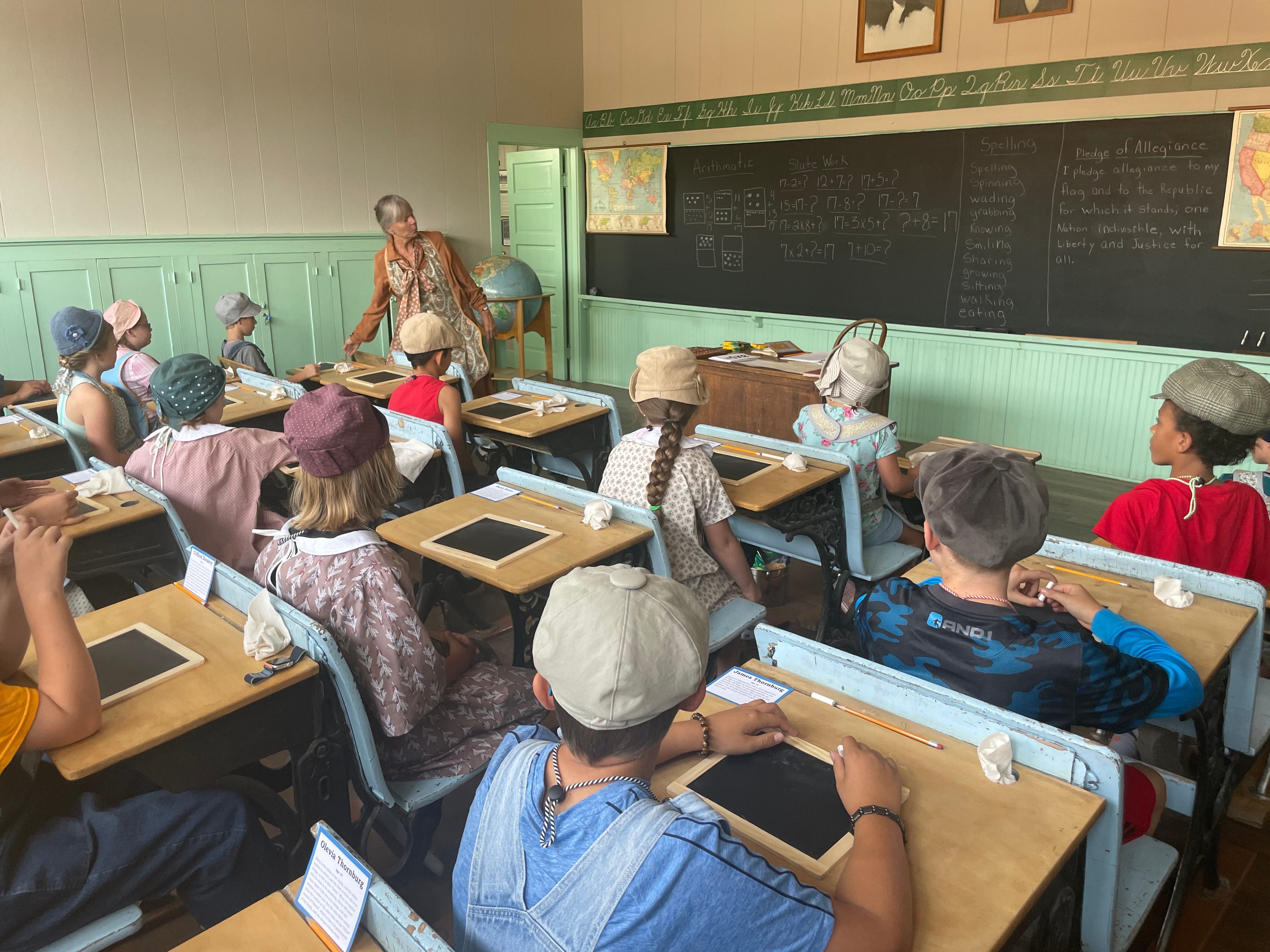
The grandchildren of farmers, ranchers, business owners and outlaws all gather in one room with their spinster teacher who keeps the order with a ruler. The girls are dressed in simple dresses and frocks and the boys wear caps and overalls. As they write on their slates, the year is no longer 2023. The students have all traveled back to time to the 1920’s in rural Wyoming!
The Middleton Schoolhouse
The white schoolhouse with its iconic bell tower was once the center of activity of the small ranching and farming community of Middleton along the Owl Creek River. The Middleton School was located about 14 miles from the town of Thermopolis in the sagebrush and near a stand of cottonwoods. Named by Colonel Sliney for his hometown in Ireland, Middleton once had its own post office and store.
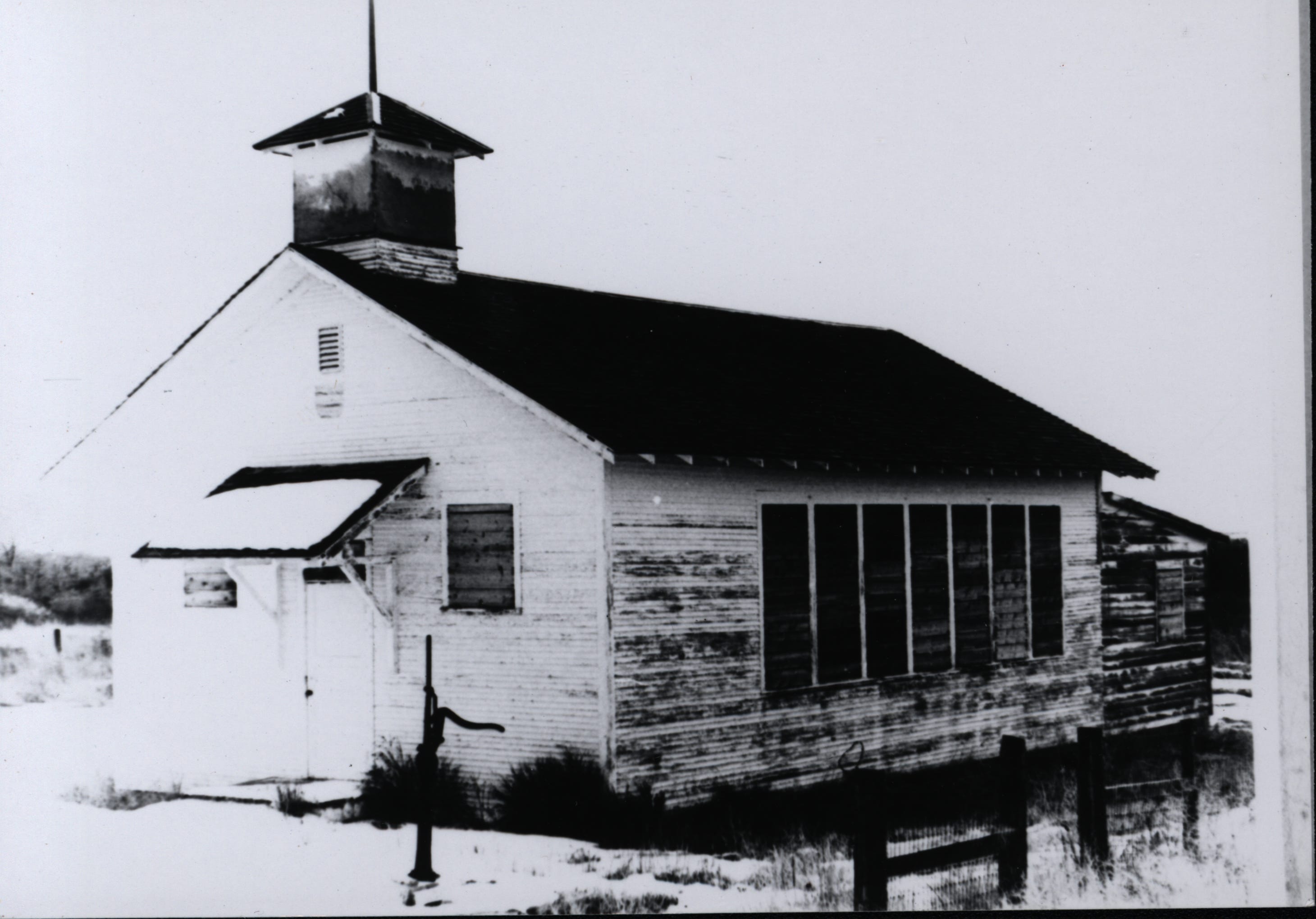
In 1917, as the first word war was raging in Europe, the war effort was felt even in rural Hot Springs County. Middleton students raised money with basket suppers and entertainment. The Busy Bee Sewing Club made their first garments for the Red Cross Society. Eighth graders memorized the Gettysburg Address and wrote essays about the importance of good roads and how to grow successful vegetable gardens.
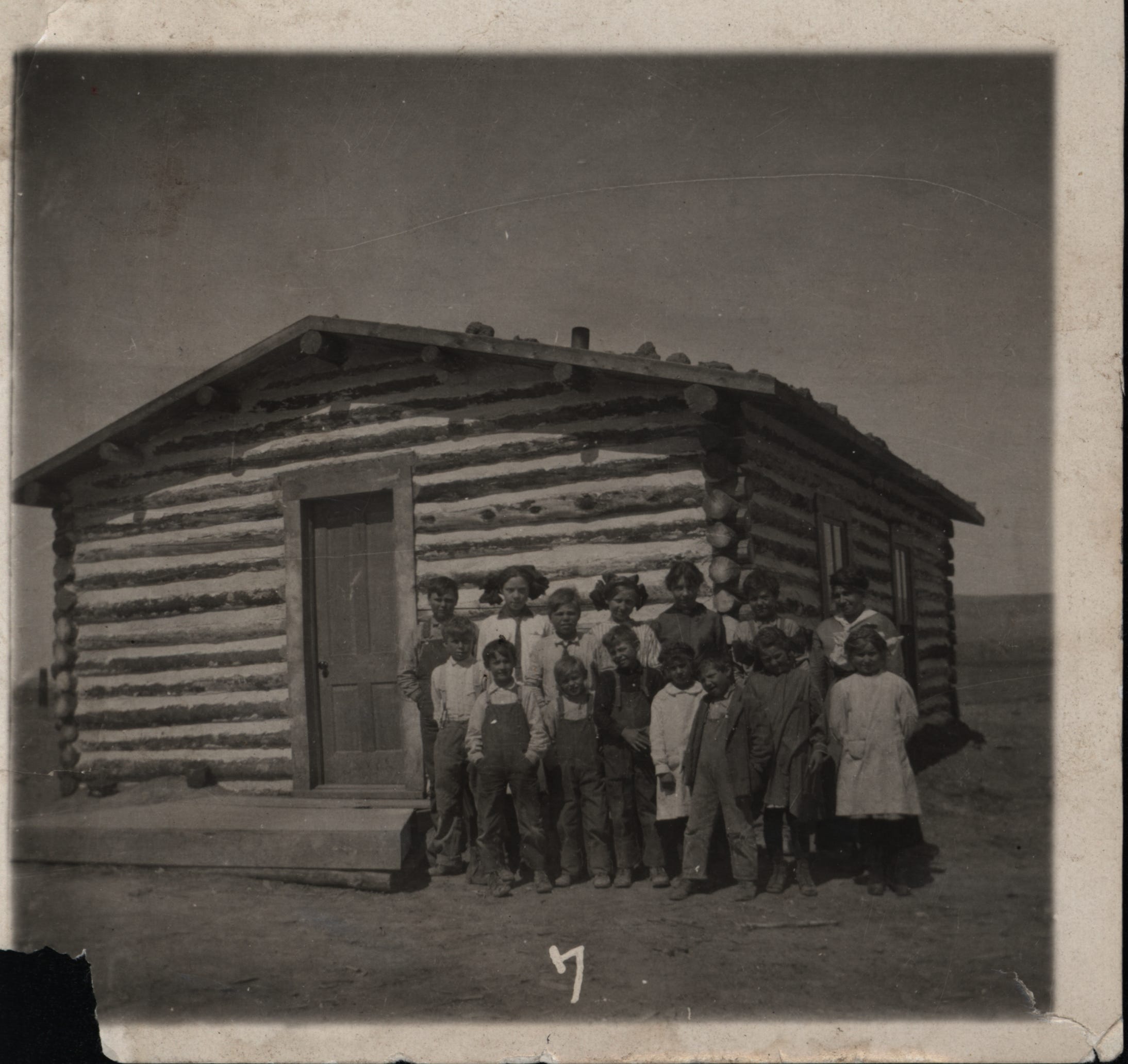
The following year, as the world emerged from war, the same students ‘adopted’ French orphans and sent them gifts. They welcomed homed their farm boys turned soldiers with community dances held at the Middleton School. Holidays were celebrated in each schoolhouse across the range such as Washington’s Birthday with popcorn balls and ‘other good things to eat’.
By 1920, Middleton had built their third and final school, a modern building that was bigger and brighter than the original log structures. Windows lined the west wall and a chalk board on the east helped with lessons. It was a one room schoolhouse in District No. 8 and Mrs. May Hobson was the schoolteacher that year, responsible for the 1st through 8th graders.
For over 30 years, this schoolhouse was used for classes during the day and community events in the evenings and weekends. Bernadine Schaff Blacketer was the daughter of a ranch hand and, with her two younger sisters, attended school in the early 1950s.
“Recess was my favorite,” she said, “We would pretend that we were ditching school. The boys were the worse and would hide in the sage brush. They would pretend not to hear the bell ringing or the teacher calling them back to class.”
She described the games, such as “Annie, Annie, Over!” where they would throw a ball over the schoolhouse, catch it and run around the school to tag another student out. The students ice skated on the Owl Creek and the entire community would use the red pump at the school for all of their drinking water.
When in 8th grade, Bernie remembered how one day, during a wind storm, she was at her desk when one of the windows blew out. -- was hit on the head by the portrait of George Washington and shattered glass littered the floor. The window was restored and school in the building continued until the mid-1950s when schools became consolidated and students were driven by bus to Thermopolis.
“It was the center of our community,” Jeanie Love said, reminiscing about living in Middleton during the same time period. “Every weekend, the schoolhouse was used for carry-ins and we played cards. My bridal shower was held there and we had country dances.”
“All the rural schools,” she explained, “were used by the community. The country dances were held all down the creek.” The desks were piled on top of each other during these lively events with someone playing the school piano or another on their accordion to keep time.
These rural schools included Grandview, Padlock, Anchor, Keystone, Hamilton Dome and Grass Creek. Eventually, after the school consolidation, the buildings were either converted into homes or sheds, torn down or moved except for the Middleton School which remained in use in its original spot for 60 years.
The weekend gatherings at the Middleton School continued until 1982. That year, the one room school house was moved by the efforts of Dorothy Milek to the Hot Springs County Museum annex and preserved for future generations.
Today, students are being welcomed back in a unique immersion program where they are introduced to life of 1920s rural Wyoming. Each student is given an historically accurate costume and a character card. They sit at the original school desks and are led through lessons from the 1920s ranging from math, handwriting and the geography of the day. Details, such as lunch pails and no plastic, are followed to make this experience as real as possible.
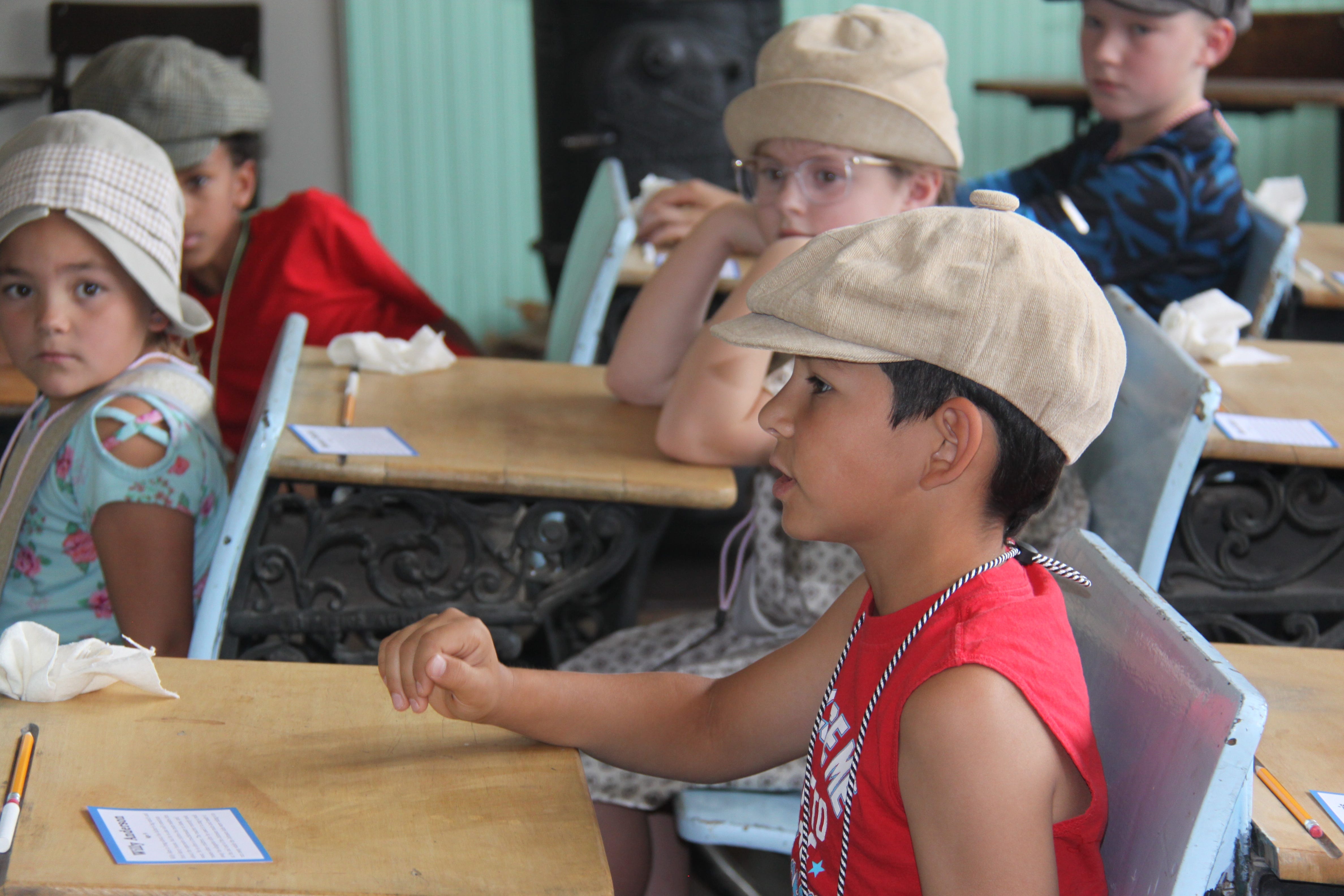
Lilly Estenson, a fourth-grade student was enthusiastic about the program, “The costume made me feel like I time traveled. Having all ages and grades in one classroom was so strange to me. Learning the pledge of allegiance was really fun because it’s different from what we do now. I also loved that we got to play actual roles of real people from the 20s.”
During the inaugural class of this program led by Storyteller Michelle King in authentic teacher garb, ten-year-old Lane Collamer stepped right into his character. He was fast with his fists and eager to demonstrate his footwork. Aiden Cleare’s character lost a pet salamander as part of his back story and his classmate, Annabelle Wyer, found it in her lunch pail. Nate King and Dallon Basse were “brothers” who both enjoyed recess best just like their counterparts did over one hundred years ago. These plot twists and long-lost siblings kept the day moving for the students.
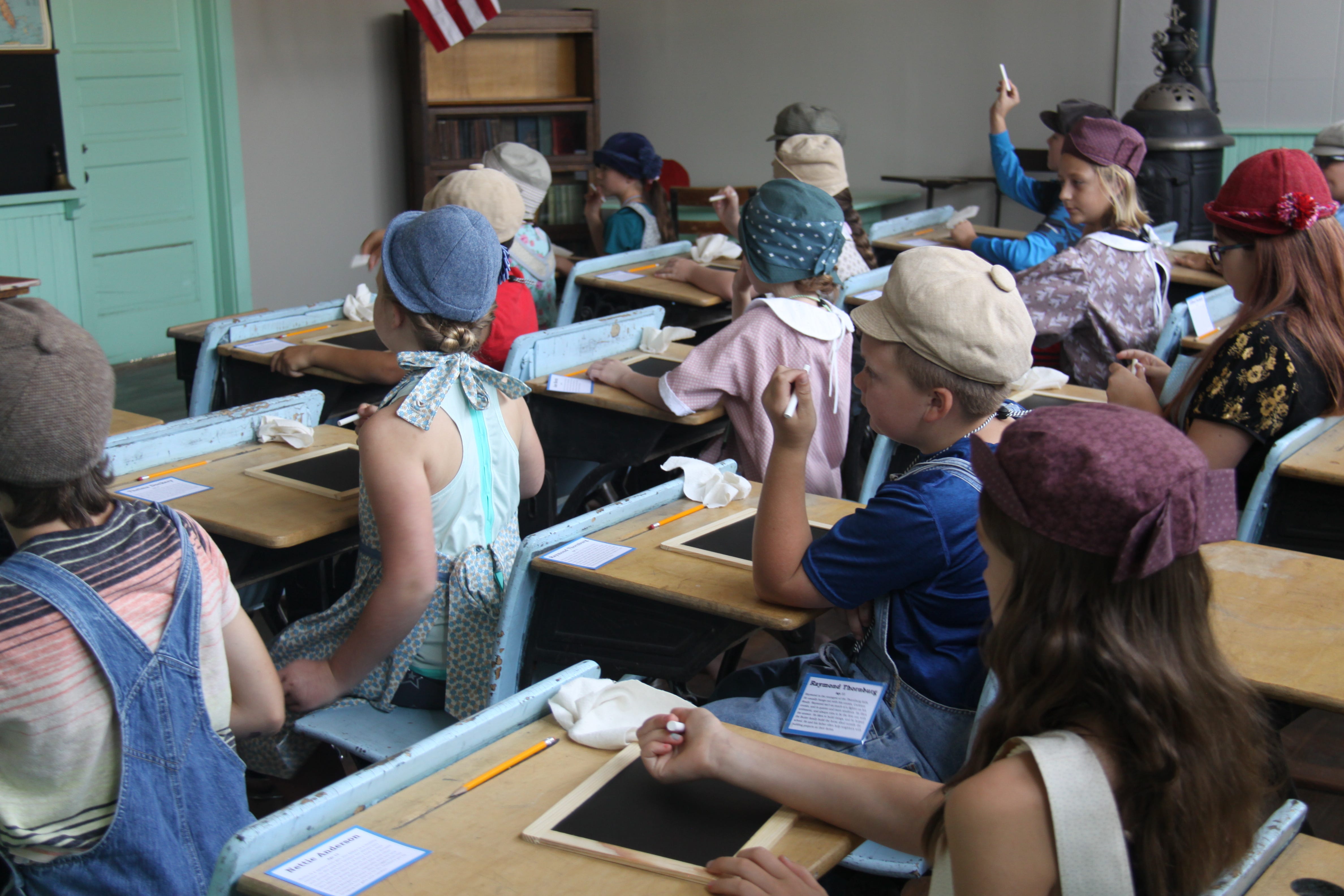
“My favorite part was being named Clifford and being the oldest child,” 5th grader Micah Arcand said. His real-life sister, 8th grader Ellie added, “It was fun pretending to be the character and learning how the people lived int the 1920s.”
These historically accurate costumes worn by the students were created from a variety of materials using actual 1920s patterns by Suzi Sellers, a professional costumer. She explains, “There is an emotional pull for many people, and anyone I’ve shown the garments to, has a story to tell. Many people who see the newsboy caps get teary eyed and tell me, ‘My Grandpa had one of those’. It’s rewarding to be a part of keeping history alive!”
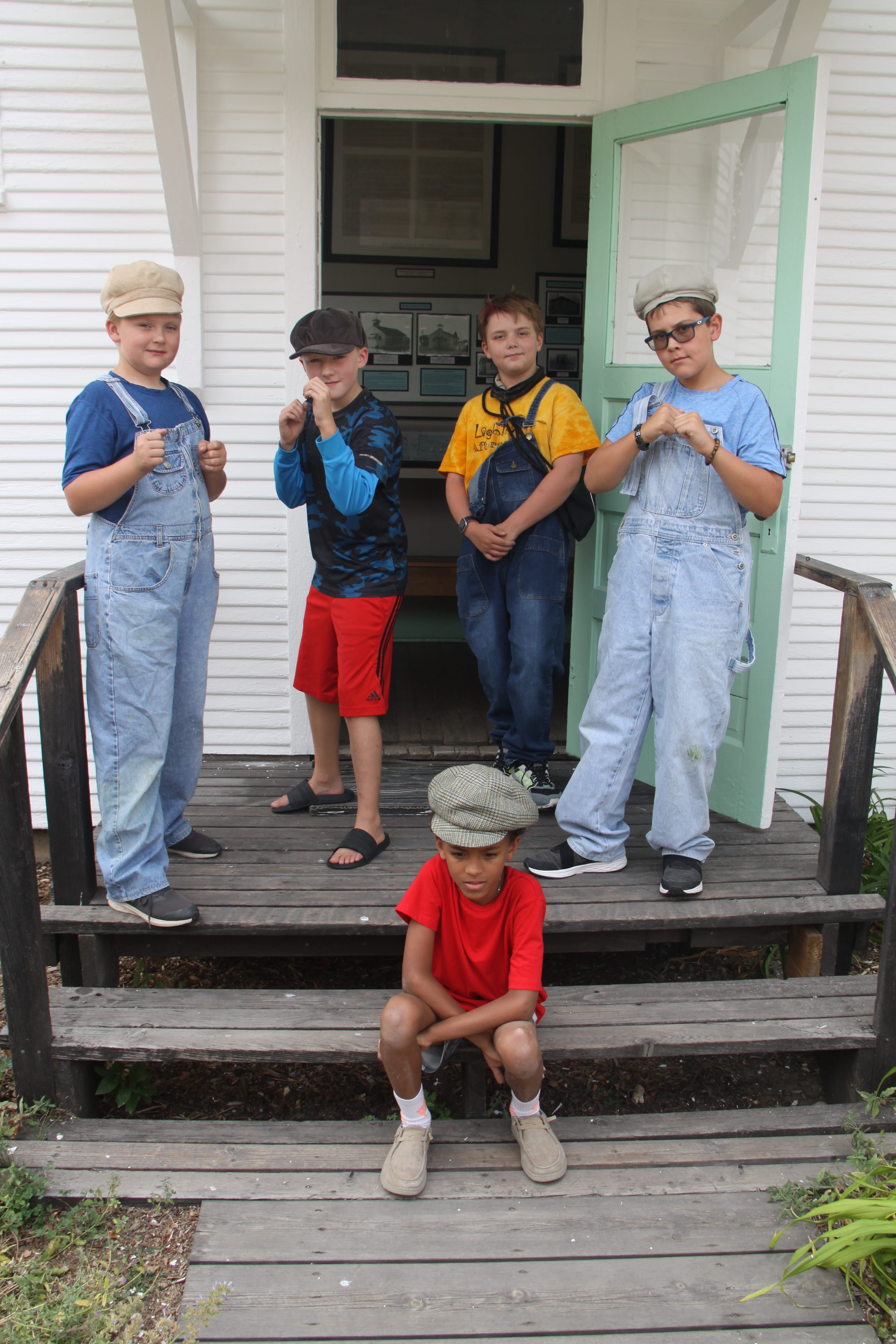
If you would like to set up this immersion program for your school, homeschool group or organization, contact the Hot Springs Historical Museum at hschistory@rtconnect.net or 307-864-5183. Online activities are also available for free at www.wyomingruralschools.com. Wyoming Rural School